Gaming Addiction psychology and management 🎲


Design approach
Discover

Define

Ideate

Design

Test

User feedback
Research
Why the Research
Gaming offers enjoyment, social connection, and even skill development. However, excessive gaming can lead to addiction and disrupt real-life responsibilities. This research aimed to understand the motivations and challenges faced by both game addicts and casual gamers with time management.

5-7 participants participated in individual interviews. A semi-structured format was used for flexibility while ensuring key topics were covered. Questions explored:
Daily gaming routines and motivations for playing.
Experiences with managing time for other responsibilities.
Emotional responses to gaming and not playing.
Strategies (if any) used to manage gaming habits.
Findings

Behavior
Addicts are often in denial

Secrecy
May hide the extent of their gaming from others.

Gaming over sleep
Casual gamers often play in their free time while addicts play in the night/anytime

Extended sessions
Feel remorseful after spending more time on games than intended.

Neglect personal hygiene
Letting basic needs like showering or eating fall by the wayside.

Emotional dependence
Rely on gaming to feel happy, fulfilled, or connected.

Phantom sounds
Hearing in-game sounds or music even when not playing.

Game preferences
Casual gamers are flexible with genre in contrast to addicts obsessed with particular game

Negative loop
Depression and isolation causes games addiction which further causes the same.
Insights
The line between casual and addicted gaming can be blurry, with some individuals falling somewhere in between.
The line between game addiction and gambling is getting blurred.
Game addicts
Loss of Control
Escape Mechanism
Social Isolation
Negative Emotions & Mood swings
Chasing Achievements
Casual gamers
Time Management Struggles
Immersive Experiences
Relaxation and Stress Relief
Guilt
User psychology

Id (Instinctual Desire)
The id is the primitive, instinctual part of the mind that seeks immediate pleasure and gratification without considering consequences.

Ego (Reality and Decision-Making)
The ego acts as a mediator between the ID and the external world, making decisions that balance desires with reality.
Ego
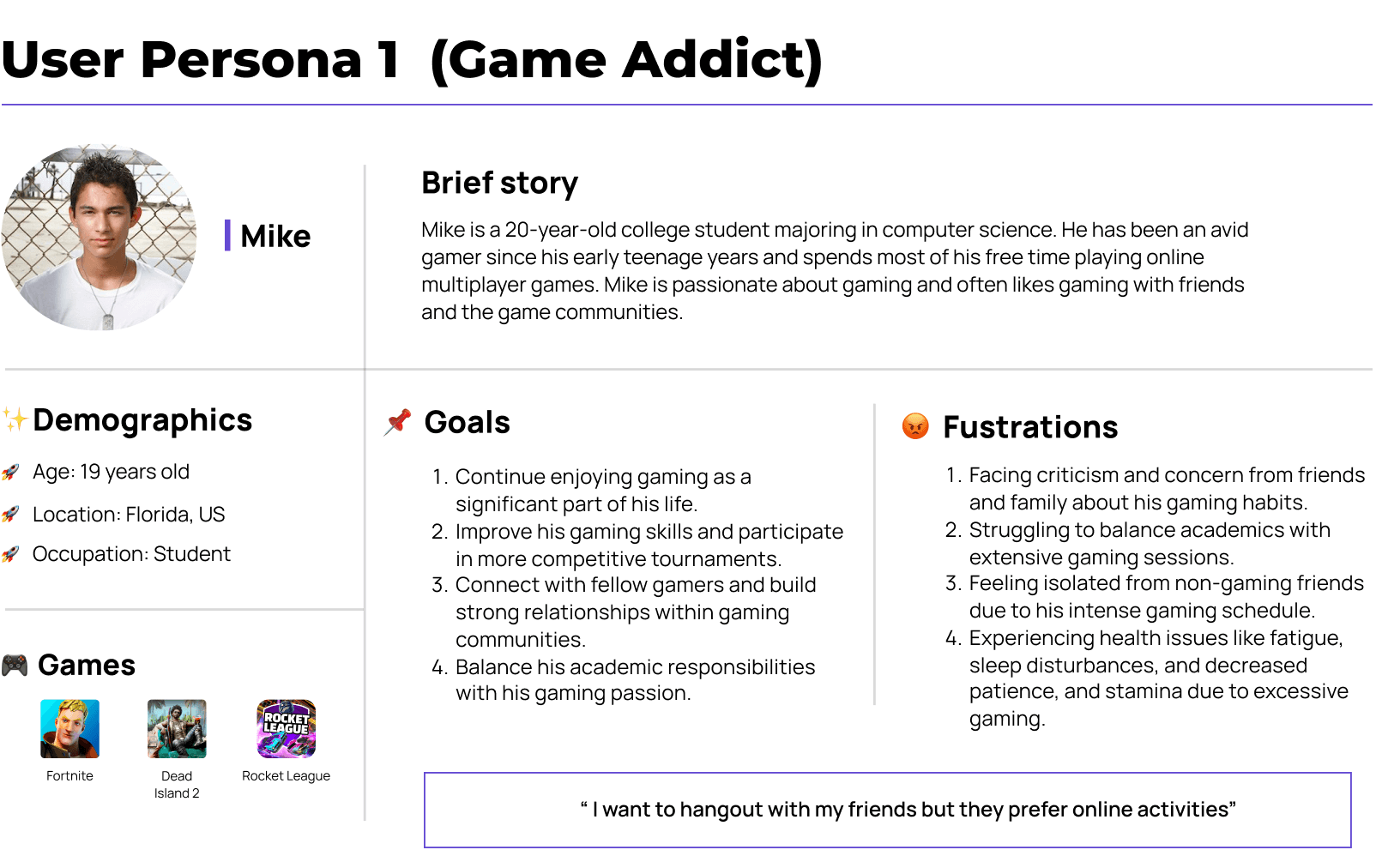
Individuals enjoy gaming regularly but seek better time management to balance their hobby with other responsibilities. They are motivated to control their gaming time but are having difficulty in doing so.
ID
Individuals grappling with gaming addiction and need for strict control over their gaming habits, To break free from addictive patterns and regain control over their lives, but are blind to these facts as the ID is what's driving their brain

Ideation
1
Tone of the message
Consider mood and emotion the user is feeling
2
4
3

Last day remaining to complete the weekly streak and unlock to play with your friends
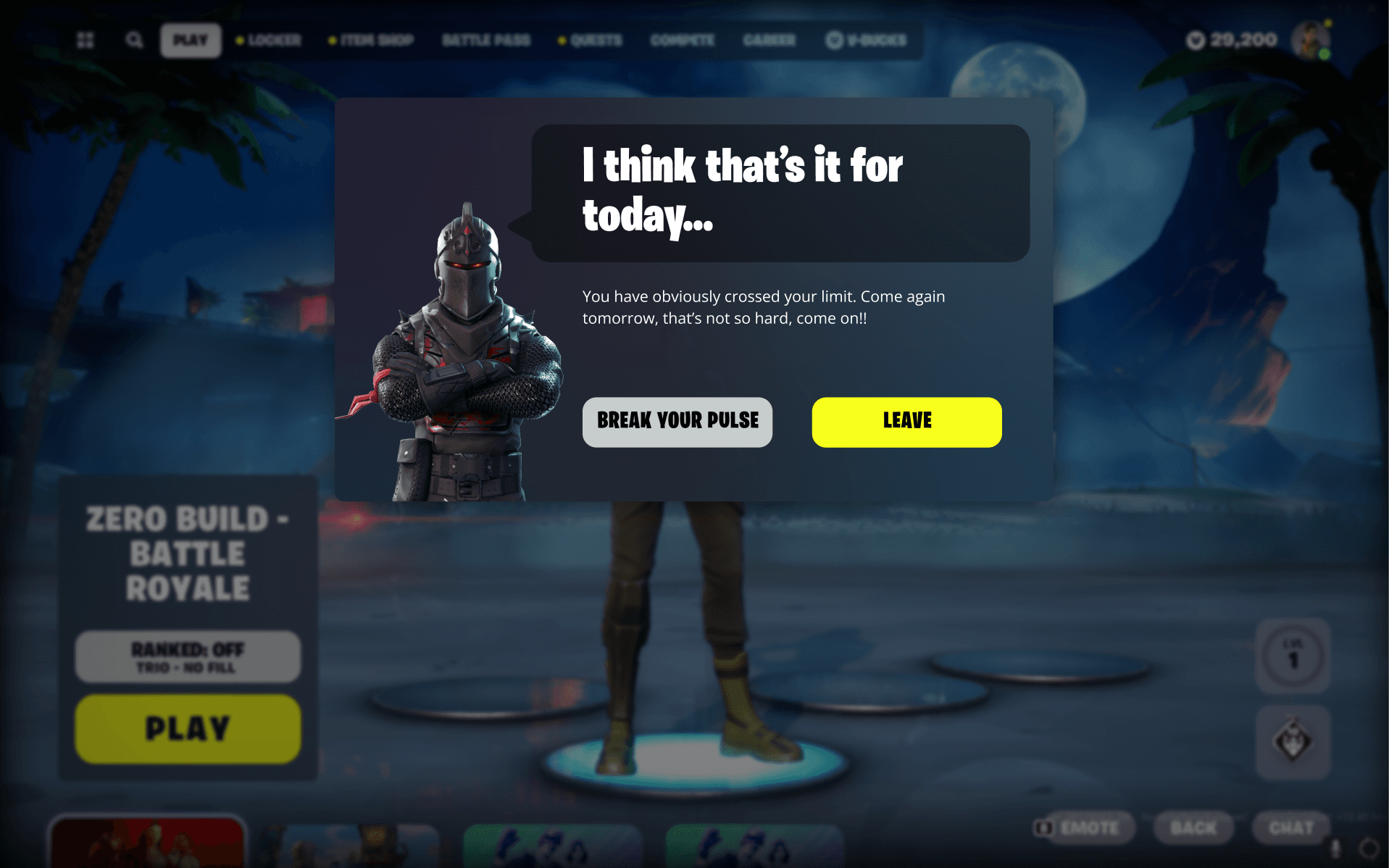
Users can manually enable this feature and set a time limit for gaming sessions. Maintaining the streak rewards users while breaking the streak results in locking certain features
Addiction Detection and Trigger
For users showing signs of addiction, the feature automatically activates with personalized time limits and streak periods.


Gradual Change and adjustments
Time limits and streak periods will gradually decrease, selective strip away of gaming elements that are associated with the addictive behavior, aiming to reduce the individual's desire to engage in excessive gaming.
Professional Gamer Exclusion
The algorithm uses metrics such as skill level, tournament participation, and gameplay frequency to differentiate between professional gamers and addicts, preventing unnecessary restrictions.

Introducing 'Pulse'



User Journey

Business Advantage
01.

Positive Reputation
The game is seen as caring for its player’s well-being, enhancing its reputation and attracting users.
02.

Enhanced User Experience
Players can manage their gaming time better, for more balanced gaming lifestyle.
03.

Increased engagement
Encourages players to maintain Guilt-free play, boosting engagement and retention.
04.

Healthier gaming habits
Promotes responsible gaming and helps prevents addiction.